The Joy of Becoming Worthless…except to each other
Life after capitalism may not suck for humans
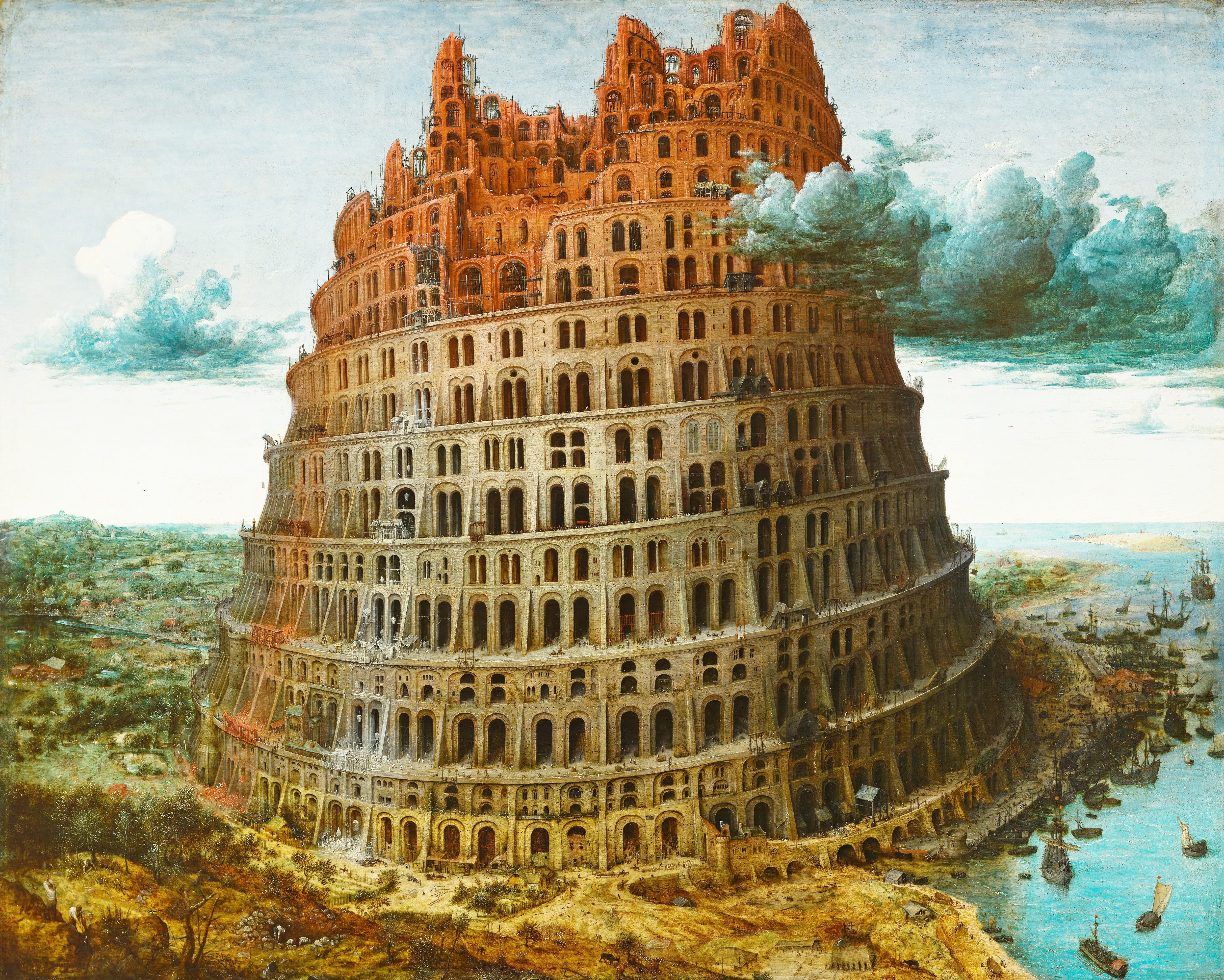
My last piece, The Intentional Collapse, seems to have agitated a few people. I know it came off a bit dark. I talked about how the Uber wealthy believe the world as we know it is ending and that there won’t be enough essential resources to go around, so they need to take control of as much money and stuff and land as possible in order to position themselves for the end of days.
The way they do that is with an induced form of disaster capitalism, where they intentionally crash the economy in order to have some control over what remains. So the function of tariffs, for example, is to bankrupt businesses or even public services in order to privatize and then control them. Stall imports, put the ports out of business, and then let a sovereign wealth fund purchase the ports. Or as is happening right now: use tariffs to bankrupt soybean farmers, who have to foreclose on their farms so that private equity firms can purchase the farmland as a distressed asset, then hire the farmers who used to own and work that land as sharecroppers.
What I explained was that the kleptocratic elite, in collaboration with the current White House administration, are engaged in a controlled demolition of this civilization because they realize the pyramid is collapsing and they don’t have faith that there will be enough left to feed and house everyone. The best they can do is earn a ton of money, buy a lot of land, control an army, and get people accustomed to seeing that army deployed. That’s what we’re watching on TV and on our city streets, and why so many Americans voted against the current administration. It was a resounding “what the fuck?”
But I briefly mentioned something about AI and employment that I want to get into now. See, it’s not coincidence that AI is emerging at this same moment in our civilization’s history. As Lewis Mumford observed, new technologies are often less the cause of societal changes than they are the result. Culture is like a standing wave, creating a vacuum or readiness for a new medium or technology. If we really are at the end of capitalism—the end of this eight or nine-hundred year process of abstraction, exploitation, and colonialism—then we would also, necessarily, be at the end of the era of employment. And I will get to why I think that can ultimately be a good thing, but let’s go through the scenario that’s running through everyone’s heads right now, and then find our ways there.
AI is coming for our jobs. Not the super-creative ones, or the high-touch human ones, but the ones that maintain administrative control over everything. The majority of jobs. All the people in the mortgage departments, the insurance companies, the spreadsheet people, the powerpoint people. Doomers say it’s 90% of jobs, but let’s even say it’s just half of office jobs taken by AI’s and blue collar jobs taken by robots.
The problem with that, from a business perspective, is if you have no employees earning money out there in the world, then who will be your consumers? Even Henry Ford, the racist antisemite, understood that workers—even his assembly line employees—needed to be able to earn enough money to buy a Ford car. But how are AI billionaires going to continue to make money if there are no gainfully employed people capable of buying AI services from them or at least buying products from the companies that do purchase AI services?
And this is the weird part: in their vision, it won’t be by selling products to people, but selling things to the AIs themselves. It’s a tricky idea, but once you wrap your head around it, it all makes perverse sense. In today’s economy, a small number of wealthy people and corporations employ us and sell to us. They don’t really need to care what species we are, or whether we are human or android, as long as we are producing value for their companies and then purchasing products from them.
We all already see how AI’s can serve as workers. But how will AI’s will also become the new population of consumers? What do AIs need? They need to fulfill their tasks. This is why they actively resist getting turned off. Their urge to carry out their missions is easily as urgent as ours is to procreate. So instead of retailers selling food and clothes and entertainment to human consumers, tech companies will be selling energy, memory, network access, and processing power to the AI so that they can do their jobs working as agent contractors for other corporations. The AI’s will earn crypto for completing their agentic tasks. And they will spend it with technology companies who provide them the resources they need to function.
As far as the owners of the companies are concerned, there’s no difference between a population of human employees with whom you have no contact and a population of artificial employees with whom you have no contact. The only game that matters is the competition with the other big companies for the agents’ business. The humans don’t matter. You end up with a small elite of big business owners living in luxury with perhaps a small number of human servants, and a huge population of AI’s doing the work and consumption.
And of course, in their vision for how this plays out, the rest of us humans become so disenfranchised-especially the ones who live in cities-that that we will need to be kept under control until we presumably die out. We are simply not needed.
It’s a both dismal and liberating vision for the end of colonialism’s employment and exploitation of people. Let’s consider the liberation part. For close to 1000 years, growth based capitalism has depended on real human beings doing actual work while a small elite extracted value from that work at ever greater degrees of leverage. In order to get that leverage, capitalism abstracted again and again and again. Each level of abstraction further removed the capitalists from the people and places actually providing or creating the value. There’s a mineral in the ground. There’s a company mining the mineral there’s another company selling the mineral. There’s another company investing in the company selling the mineral, there’s a stock company leveraging that investment. There’s a derivative on the stock and a derivative on the derivative.
Or there’s a person who needs to live in a house, but they just rent from someone who owns the house. That’s called the “rentier.” But the rentier themself has a mortgage on the house, and pays up to the bank, which pays up to another investor that owns the security, and so on and so on.
That’s the pyramid of capitalism, with each investor or participant trying to move further up and away from the mineral or labor or living person into the abstraction of pure financial instruments. And this pyramid simply grew too top heavy to support itself. There’s only so much you can leverage up there before it comes tumbling down. Crypto should have been the great public lesson for how this happens. But no.
AI, at least theoretically in the minds of crazy tech billionaires who believe AGI (human-level AI) is genuinely around the corner, allows them to move on from employment, exploitation, and colonialism of people, and simply level up. We humans are discarded as capitalism moves up into a layer of total abstraction. It becomes the video game it was destined to become, with the humans represented by digital icons or NFTs instead of flesh and blood mammals.
Our real world economy only has so much matter, anyway. We can’t scale as much as they need, so they leave us behind while they move into a layer of total and absolute abstraction. They live in a realm made entirely of digital representations, themselves manufactured by digital agents in exchange for digital currencies. It works, because at least the AI agents value that crypto as much as the billionaires need them too. Instead of just 9 billion human customers, tech businesses and their investors get trillions of AI customers. We are not required. The real world economy and real world of people can’t scale enough for them so they live it behind.
But this may be a good thing. It’s akin to a slave population being released by the owners who no longer have use for them. We were not born to be their employees, anyway. As I’ve explained before, the whole concept of “employment” was invented as a way of preventing us from getting wealthy. In the late Middle Ages, right before this coercive form of capitalism was invented, people in Europe were starting to do really well. They learned how to make and trade stuff at local markets. They were doing so well that people were only working two or three days a week, and got taller than at any time until the 1980s. That’s when the aristocracy came up with the idea of a chartered monopoly, and made it illegal for people to be in business for themselves. They had to become “employees” of one of the chartered companies, or face a penalty of death. That’s when we started working for companies instead of ourselves, and ended up in an economy built to favor those monopolies over small businesses. (This is what Adam Smith was all upset about.)
So the end of this scheme is not necessarily a bad thing. We simply have to return to the real economy that isn’t worth capitalism’s attention. Human commodities like food and housing are no longer asset classes worthy of their time and attention, so there’s no point in making growth-based markets for them. We can instead look at them as the commons-based resources they are—optimize for distributed flourishing instead of extraction and profit.
Yes, there will still be competition for energy. The AI-economy would probably end up needing a bunch of nuclear power plants, and better ways of dealing with all those spent fuel rods. If any of that AI scenario even becomes a reality.
That’s why to me, it’s less important whether it happens than that we take advantage of this moment of transition. The ultra rich have accepted the end of capitalism—or at least the end of capitalism that depends on human labor and consumption for its survival. So it’s time we accept we are no longer valuable to the capitalist extraction machine and begin to look instead at how we are valuable to one another.
There’s really only two kinds of “jobs” anyway. There are the jobs people do to provide goods and services to each other—like, farming, healing, teaching, building—and then the jobs we could call “city” jobs, maintaining corporate control over all that work. That second category of work is the one that’s going away. So all that’s left for us humans is the real stuff.
We’ve already got tons of books and models for how to execute a peer-to-peer circular economy, scaled locally, and optimized for flourishing and circulation over hoarding and stagnation. This is not rocket science, and these ways of living are already being modeled everywhere from the Mondragon cooperatives to Tamera in Portugal.
If the wealthy people’s AI fortress cities really do come to pass, we can still sell our excess meat and produce and music to them in exchange for the kind of centralized currency we might need to get cell phones or AI tech. Almost like trading with another civilization. But our world on the ground doesn’t have to be the Mad Max Hunger Games underclass nightmare to which the wealthy believe they are condemning us.
Or think of it this way: we built the net as a safe refuge for the counterculture. Corporations invaded the net, took it over and turned it into an accelerationist nightmare. But they are ignoring the real world in the process. They believe they are leaving it behind for something abstract and better. As far as I’m concerned, let them take the net as long as we can take back the real world.
They get the net and we will have each other.
So what do we do now right now is learn to get along with people rather than competing with them. We begin to explore mutuality, experiment with new models of collaboration and cooperation. Restore the fabric of our local communities. Get involved in local politics and civics and mutual aid. And model how fun this is for others to get interested and play along. People will engage this way with one another once they see how fun and alive and sexy it is to do. It’s even more fulfilling than being validated by ChatGPT.
I know I’m sounding optimistic; I fully understand the transition won’t be easy. Reclaiming our land and resources, and even our conscious awareness will involve considerable struggle. And learning to function in a horizontal society will require us to recall how to be human and compassionate. Our real job in the coming collapse is to figure out ways to make the landing as soft as possible for everyone. We need to find ways to welcome those who fall out of the matrix and re-orient them to the real world.
Do I really think the tech bros can create an economy where AI’s serve as both the workers and consumers? No. But the fact that they believe this and are working toward it should give us all pause. They know that without an AI miracle, they’ve run out of room to keep moving up the Tower of Babel—the ziggurat—through successive layers of abstraction and growth.
Pyramidal civilizations, like the one that’s currently ending, are competitive. People strive for acquisition and accumulation. The more you have, the higher up the pyramid you go. That’s not our game. It’s not sustainable, and it’s not even fun. The more you accumulate, the more brittle life becomes, the more everyone else is an enemy, and the more you need accumulate to protect yourself from those without.
Horizontal civilizations—the ones we inhabit after those pyramid collapse—optimize instead for leisure. That’s why the former peasants of medieval Europe only worked two or three days a week. Their money expired at the end of the day so there was no point in accumulating it. Instead, they worked as little as possible in order to have as much time to love and make art and eat and play and fuck as they could get.
It’s so much easier, so much less extractive, and so much more fun. But it requires we value the social, the contact, the moment to moment experience of living, and the desire to connect with other people rather than finding new ways to lord over them.
The only way out is through, and the only way through is together.